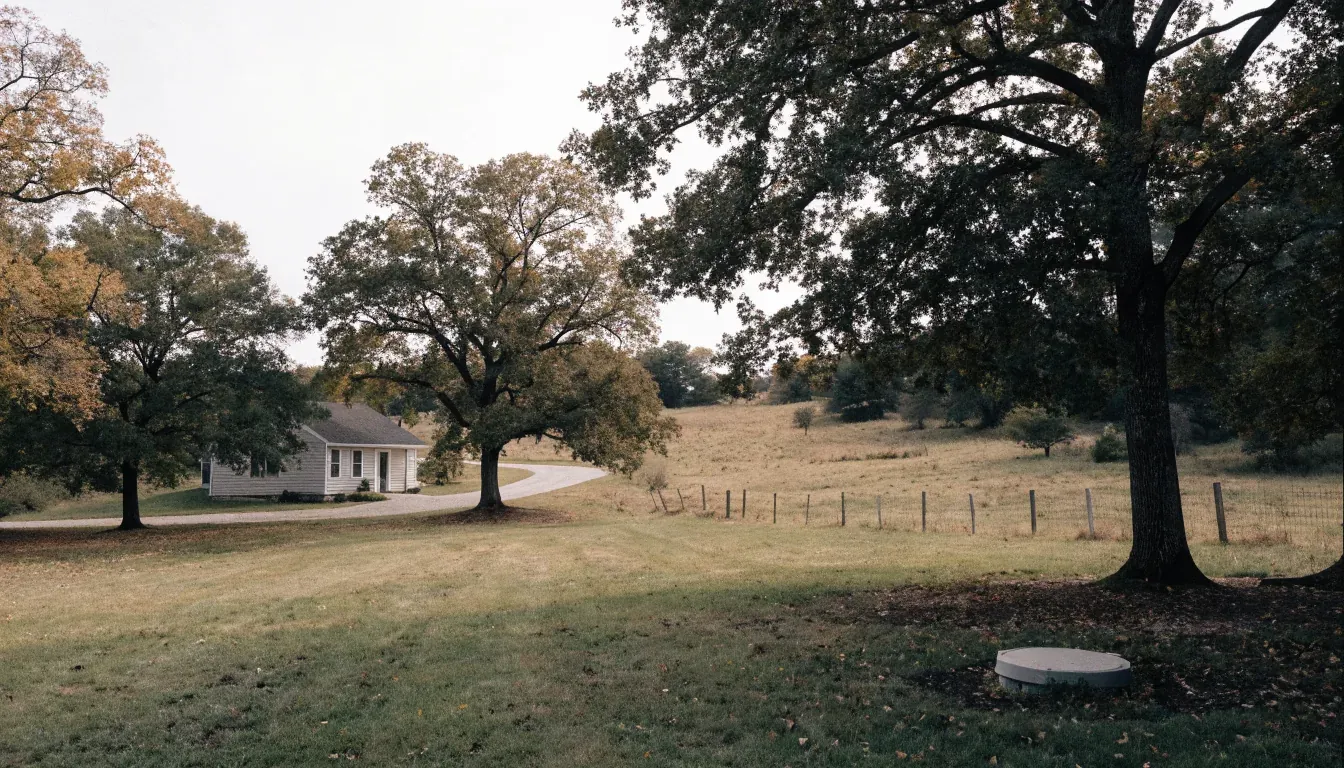

Septic systems and lagoons in Missouri
Missouri does not have one kind of septic system, it has a range, and which one you get is decided by what the soil will take rather than by preference. The rule covers building sewers, septic tanks, absorption systems, mounds, sand filters, gravelless systems, aeration units and single-family lagoons. On good ground the answer is a conventional trench field. As the soil gets slower and the bedrock gets shallower, the answer moves up this page, and in the slowest ground of all it arrives at a lagoon.
What does a conventional trench system need?
Soil that drains fast enough and depth beneath it. Absorption trenches should not be built in soils with a percolation rate slower than sixty minutes per inch, and in no case in soils slower than one hundred twenty minutes per inch. Underneath, a standard system needs at least one foot between the trench bottom and the limiting layer or seasonal high water table, rising to four feet to groundwater or bedrock in highly permeable soils and in cherty clay soils in areas of severe geological limitations.
Those two constraints are what most of southern Missouri runs into. Shallow soil over fractured limestone fails the separation test long before it fails the percolation test.
Source: 19 CSR 20-3.060(5)(A)2., Missouri Code of State Regulations, read 2026-09-12.
When does the design need an engineer?
In more situations than most homeowners expect. A percolation rate slower than sixty minutes per inch requires the design to be drafted and signed by a registered engineer, unless suitability and sizing were established by a soil evaluation under section (7) of the rule. Separately, every alternative system except a wastewater stabilization pond has to be designed and stamped by a licensed engineer, and has to comply with all local codes and ordinances as well.
So on difficult ground the engineer is not an upgrade you are being sold, it is a requirement the soil triggered.
Source: 19 CSR 20-3.060(6)(A), Missouri Code of State Regulations, read 2026-09-12.
What is a Missouri sewage lagoon, and when is one allowed?
A residential sewage lagoon, which the rule calls a wastewater stabilization pond, is a real and permitted option in rural Missouri, and it is the answer where the soil is too slow for anything else. The rule is explicit about the fit: a pond can provide satisfactory sewage disposal in rural areas where soils are not suited for absorption systems, and ponds may be used where the soils have been demonstrated to be very slowly permeable, meaning percolation rates slower than one hundred twenty minutes per inch.
That is the same threshold at which a trench field becomes impossible, which is the neat logic of it: the ground that rules out an absorption system is the ground a lagoon is for.
Source: 19 CSR 20-3.060(6)(D), Missouri Code of State Regulations, read 2026-09-12.
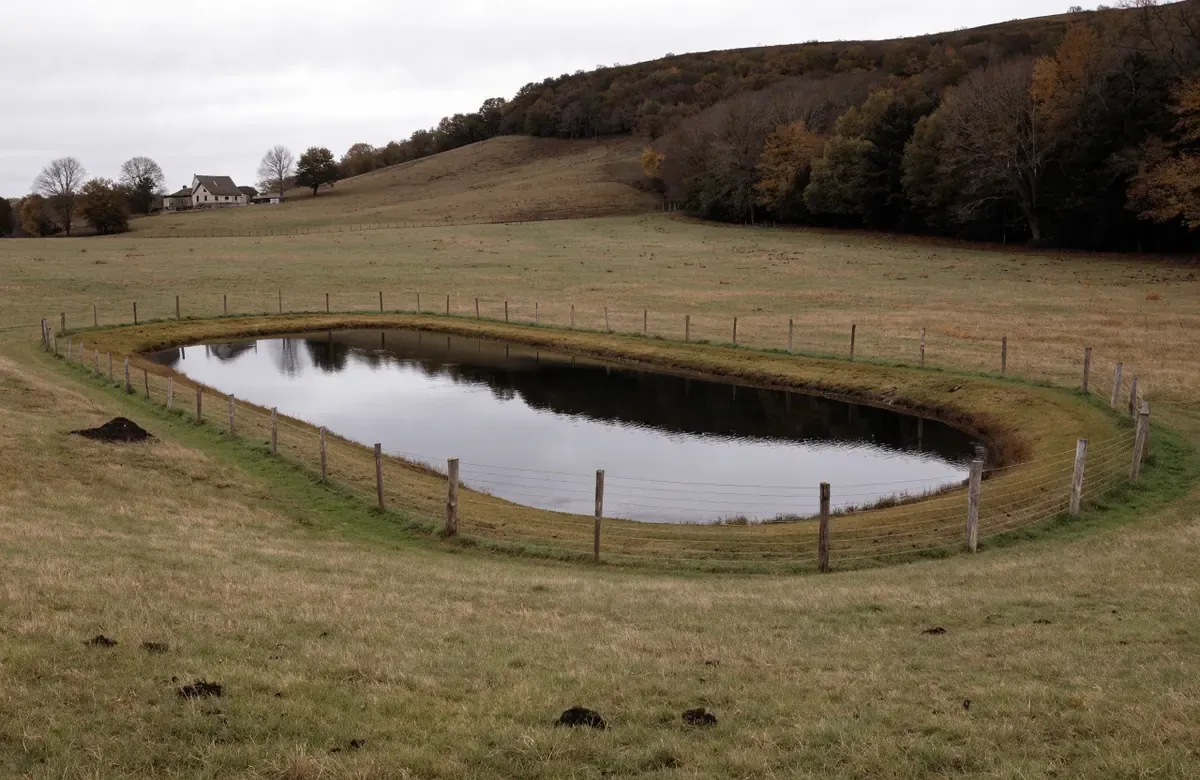
How much room does a lagoon need?
More than most lots have, which is the practical constraint. The pond has to sit at least seventy-five feet from property lines measured from the adjoining pond shoreline, and that distance has to be increased where necessary to keep all effluent on the property it came from. It also has to sit at least two hundred feet from the nearest existing residence, at least one hundred feet from the residence it serves, at least one hundred feet from a potable water supply or pump suction line, and at least fifty feet from a stream, water course, lake or impoundment.
The two-hundred-foot separation from the nearest existing residence is usually the one that decides it, because it depends on a neighbor's house rather than on your own lot.
Source: 19 CSR 20-3.060(6)(D)1., Missouri Code of State Regulations, read 2026-09-12.
How is a lagoon sized, and can a subdivision use one?
A pond is designed on four hundred forty square feet of water surface per bedroom at the three-foot operating level. That figure may be reduced by up to twenty percent where a septic tank, aeration unit or other pretreatment device comes before the pond, and there is a floor: a minimum water surface area of nine hundred square feet at the three-foot level.
On subdivisions the rule is discouraging rather than silent. Single-residence wastewater stabilization ponds are not generally suitable in subdivisions with lots under three acres, and no more than one single-family residence may be served by one pond.
Source: 19 CSR 20-3.060(6)(D), Missouri Code of State Regulations, read 2026-09-12.
Does the whole system have to be on my land?
Yes. The entire sanitary sewage system has to be on property owned or controlled by the person who owns or controls it. Where part of it is not, an easement permitting use and unlimited access for inspection and maintenance has to be obtained.
This matters more than it sounds on narrow rural lots and on old properties where a field was put in before anyone worried about where the line ran. It is worth establishing before a sale, not after.
Source: 19 CSR 20-3.060(1)(C)4., Missouri Code of State Regulations, read 2026-09-12.
Reading your own ground
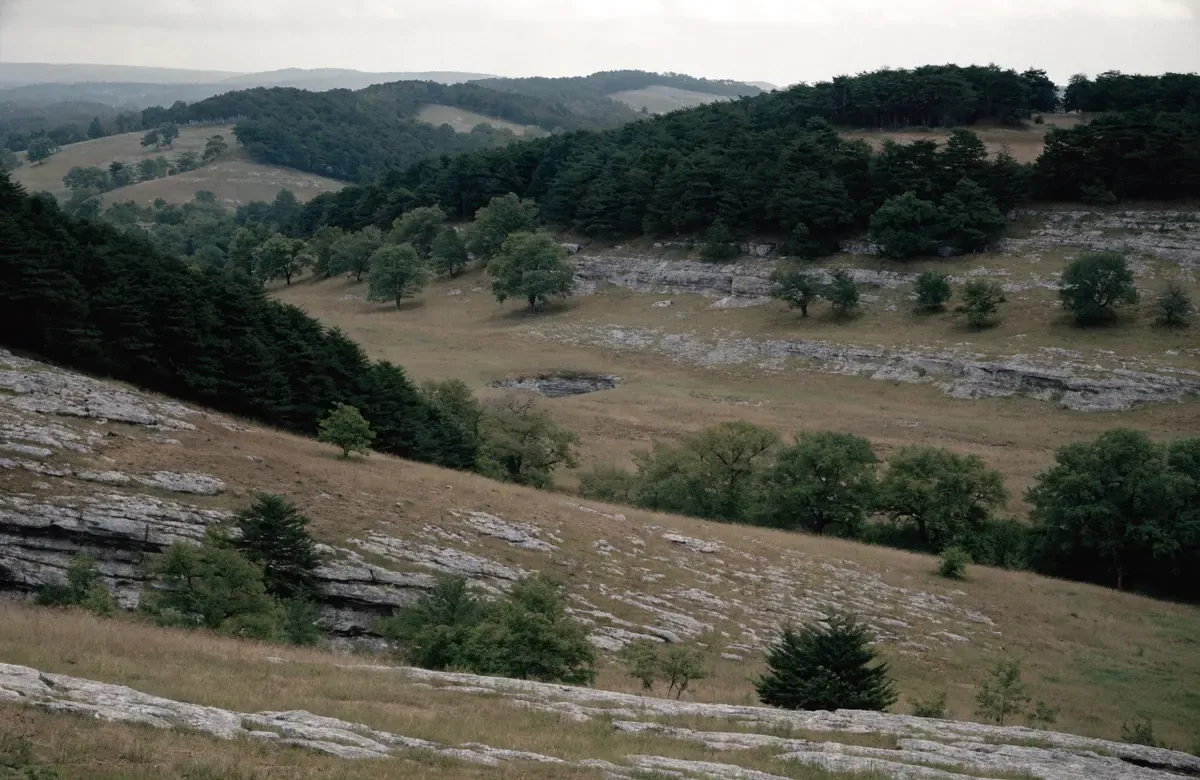
Missouri is not one kind of ground, and knowing which kind you are on tells you what to expect before anyone digs. North of the Missouri River is glacial till, often slow and dense, where percolation rates rather than bedrock tend to be the constraint. The Ozarks to the south are karst: cherty clay over fractured limestone, shallow soil, and the vertical separation requirement doing the deciding. Western Missouri, out toward the Kansas line, is unglaciated Osage Plains, clay-rich and slowly permeable, where a large share of lots end up on engineered designs rather than gravel trenches. The river bottoms are alluvium, where the water table is the question. None of that replaces a site evaluation, but it does explain why neighbors two counties apart get very different answers to the same question.
Next: the soil evaluation that establishes which of these applies to your lot.
Get a free quote from a Missouri septic contractor
Tell us the county and the job. No email needed.
A marketing service, not a licensed contractor. Septic work is performed by independent local contractors.
Need the job done, not just the rule explained
Your request goes straight to an independent local septic contractor serving your Missouri county, usually within about an hour during the day, not a national lead list.
Tell us the county and the jobLast reviewed 2026-09-12.